Nitric Shock Pre-Workout (Watermelon)
Nitric Shock Pre-Workout (Watermelon)
Couldn't load pickup availability
Used as a pre-workout supplement to promote energy, increase focus and maintain endurance. It encourages the mind and body to respond quickly during a workout and allows more nutrition to flow through the body to your muscles. This pre-workout will not cause sleep disturbances when taken close to the end of the day. It also helps promote muscle mass development.*
| Formula Purposes & Benefits |
|
Pre-Workout (Watermelon) is synthesized to improve exercise performance, increase muscle protein synthesis, prevent muscle tissue breakdown, increase energy, increase cognition, enhance your pump, and take your workouts to the next level! Our product is synthesized utilizing the latest scientific research and formulated with optimal evidence based efficacious amounts.
|
|
Formula Ingredient Deck |
Benefits Of Each Ingredient |
|
Vitamin B6 pyridoxal 5'-phosphat(PLP) |
|
|
Niacin (Vitamin B3) |
|
|
Caffeine Anhydrous |
|
|
L-Citrulline Malate |
|
|
Bioperine |
|
|
Folate (Folic Acid) |
|
|
Vitamin B-12 (Methylcobalamin) |
|
|
Creatine Monohydrate |
|
|
N-Acetyl Tyrosine |
|
|
Choline Bitrate |
|
|
DMAE Bitrate |
|
|
L-Theanine |
|
|
Bacopa Monnieri |
|
| Proper Use of This Supplement |
| Suggested Use: Stir 1 rounded scoop with 6-8ounces of cold water and consume 30-45 minutes before beginning activity. |
| Our Formula Vs Other Formulas on the Market. | |
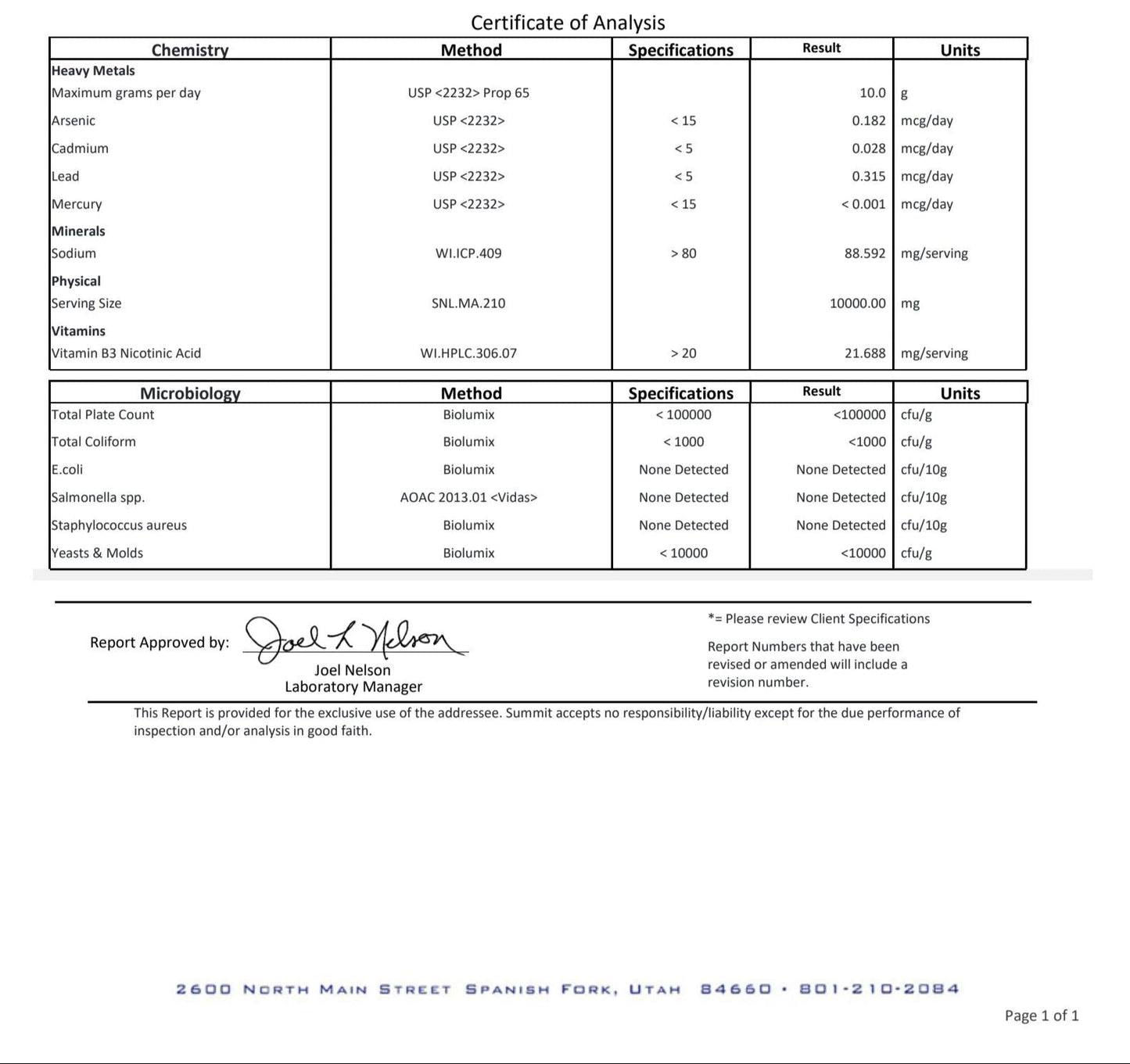
| 1. Uses third-party independently tested ingredients that are made in the USA, GMP certified, and made in an FDA registered facility. | 1. Source cheap ingredients from heavily polluted soils. Even “organic” supplements not third-party tested have been removed by FDA due to high levels of heavy metals. |
| 2. Utilizes efficacious evidence-based dosages with optimal ratios of amino acids, nootropics, and pump enhancers to support exercise performance and recovery. | 2. Use low amounts of cheap forms of amino acids, nootropics, and pump enhancers that result in poor absorption and muscle growth, recovery, and exercise performance. |
Sources:
- Guest, N. S., VanDusseldorp, T. A., Nelson, M. T., Grgic, J., Schoenfeld, B. J., Jenkins, N., Arent, S. M., Antonio, J., Stout, J. R., Trexler, E. T., Smith-Ryan, A. E., Goldstein, E. R., Kalman, D. S., & Campbell, B. I. (2021). International society of sports nutrition position stand: caffeine and exercise performance. Journal of the International Society of Sports Nutrition, 18(1), 1. https://doi.org/10.1186/s12970-020-00383-4
- Barkhidarian, B., Khorshidi, M., Shab-Bidar, S., & Hashemi, B. (2019). Effects of L-citrulline supplementation on blood pressure: A systematic review and meta-analysis. Avicenna journal of phytomedicine, 9(1), 10–20.
- Figueroa, A., Wong, A., Jaime, S. J., & Gonzales, J. U. (2017). Influence of L-citrulline and watermelon supplementation on vascular function and exercise performance. Current opinion in clinical nutrition and metabolic care, 20(1), 92–98. https://doi.org/10.1097/MCO.0000000000000340
- Bahri, S., Zerrouk, N., Aussel, C., Moinard, C., Crenn, P., Curis, E., Chaumeil, J. C., Cynober, L., & Sfar, S. (2013). Citrulline: from metabolism to therapeutic use. Nutrition (Burbank, Los Angeles County, Calif.), 29(3), 479–484. https://doi.org/10.1016/j.nut.2012.07.002
- Kreider, R. B., Kalman, D. S., Antonio, J., Ziegenfuss, T. N., Wildman, R., Collins, R., … Lopez, H. L. (2017). International Society of Sports Nutrition position stand: safety and efficacy of creatine supplementation in exercise, sport, and medicine. Journal of the International Society of Sports Nutrition, 14, 18. doi:10.1186/s12970-017-0173-z
- Di Biase, S., Ma, X., Wang, X., Yu, J., Wang, Y. C., Smith, D. J., Zhou, Y., Li, Z., Kim, Y. J., Clarke, N., To, A., & Yang, L. (2019). Creatine uptake regulates CD8 T cell antitumor immunity. The Journal of experimental medicine, 216(12), 2869–2882. https://doi.org/10.1084/jem.20182044
- Kazak, L., & Cohen, P. (2020). Creatine metabolism: energy homeostasis, immunity and cancer biology. Nature reviews. Endocrinology, 16(8), 421–436. https://doi.org/10.1038/s41574-020-0365-5
- Ebrahimi, K., Jourkesh, M., Sadigh-Eteghad, S., Stannard, S. R., Earnest, C. P., Ramsbottom, R., Antonio, J., & Navin, K. H. (2020). Effects of Physical Activity on Brain Energy Biomarkers in Alzheimer's Diseases. Diseases (Basel, Switzerland), 8(2), 18. https://doi.org/10.3390/diseases8020018
- van de Lagemaat, E. E., de Groot, L., & van den Heuvel, E. (2019). Vitamin B12in Relation to Oxidative Stress: A Systematic Review. Nutrients, 11(2), 482. https://doi.org/10.3390/nu11020482
- Romain, M., Sviri, S., Linton, D. M., Stav, I., & van Heerden, P. V. (2016). The role of Vitamin B12 in the critically ill--a review. Anaesthesia and intensive care, 44(4), 447–452. https://doi.org/10.1177/0310057X1604400410
- Shipton, M. J., & Thachil, J. (2015). Vitamin B12 deficiency - A 21st century perspective. Clinical medicine (London, England), 15(2), 145–150. https://doi.org/10.7861/clinmedicine.15-2-145
- De Felice, M., Renard, J., Hudson, R., Szkudlarek, H. J., Pereira, B. J., Schmid, S., Rushlow, W. J., & Laviolette, S. R. (2021). l-Theanine Prevents Long-Term Affective and Cognitive Side Effects of Adolescent Δ-9-Tetrahydrocannabinol Exposure and Blocks Associated Molecular and Neuronal Abnormalities in the Mesocorticolimbic Circuitry. The Journal of neuroscience : the official journal of the Society for Neuroscience, 41(4), 739–750. https://doi.org/10.1523/JNEUROSCI.1050-20.2020
- De Felice, M., Renard, J., Hudson, R., Szkudlarek, H. J., Pereira, B. J., Schmid, S., Rushlow, W. J., & Laviolette, S. R. (2021). l-Theanine Prevents Long-Term Affective and Cognitive Side Effects of Adolescent Δ-9-Tetrahydrocannabinol Exposure and Blocks Associated Molecular and Neuronal Abnormalities in the Mesocorticolimbic Circuitry. The Journal of neuroscience : the official journal of the Society for Neuroscience, 41(4), 739–750. https://doi.org/10.1523/JNEUROSCI.1050-20.2020
- Nemetchek, M. D., Stierle, A. A., Stierle, D. B., & Lurie, D. I. (2017). The Ayurvedic plant Bacopa monnieri inhibits inflammatory pathways in the brain. Journal of ethnopharmacology, 197, 92–100. https://doi.org/10.1016/j.jep.2016.07.073
- Kongkeaw, C., Dilokthornsakul, P., Thanarangsarit, P., Limpeanchob, N., & Norman Scholfield, C. (2014). Meta-analysis of randomized controlled trials on cognitive effects of Bacopa monnieri extract. Journal of ethnopharmacology, 151(1), 528–535. https://doi.org/10.1016/j.jep.2013.11.008
- Sukumaran, N. P., Amalraj, A., & Gopi, S. (2019). Neuropharmacological and cognitive effects of Bacopa monnieri (L.) Wettst - A review on its mechanistic aspects. Complementary therapies in medicine, 44, 68–82. https://doi.org/10.1016/j.ctim.2019.03.016
- Lurie DI CJ. The role of bacopa monnieri in inflammatory and neurodegenerative diseases. In: Motohashi N, editor. Occurrences, Structure, Biosynthesis, and Health Benefits Based on Their Evidences of Medicinal Phytochemicals in Vegetables and Fruits.Nova Science Publishers; New York, USA: 2015a. pp. 27–61. [Google Scholar]
- Hoffer, L. J., Sher, K., Saboohi, F., Bernier, P., MacNamara, E. M., & Rinzler, D. (2003). N-acetyl-L-tyrosine as a tyrosine source in adult parenteral nutrition. JPEN. Journal of parenteral and enteral nutrition, 27(6), 419–422. https://doi.org/10.1177/0148607103027006419
- Velazquez, R., Ferreira, E., Knowles, S., Fux, C., Rodin, A., Winslow, W., & Oddo, S. (2019). Lifelong choline supplementation ameliorates Alzheimer's disease pathology and associated cognitive deficits by attenuating microglia activation. Aging cell, 18(6), e13037. https://doi.org/10.1111/acel.13037
- Jadavji, N. M., Emmerson, J. T., MacFarlane, A. J., Willmore, W. G., & Smith, P. D. (2017). B-vitamin and choline supplementation increases neuroplasticity and recovery after stroke. Neurobiology of disease, 103, 89–100. https://doi.org/10.1016/j.nbd.2017.04.001
- Jacobson, S. W., Carter, R. C., Molteno, C. D., Stanton, M. E., Herbert, J. S., Lindinger, N. M., Lewis, C. E., Dodge, N. C., Hoyme, H. E., Zeisel, S. H., Meintjes, E. M., Duggan, C. P., & Jacobson, J. L. (2018). Efficacy of Maternal Choline Supplementation During Pregnancy in Mitigating Adverse Effects of Prenatal Alcohol Exposure on Growth and Cognitive Function: A Randomized, Double-Blind, Placebo-Controlled Clinical Trial. Alcoholism, clinical and experimental research, 42(7), 1327–1341. https://doi.org/10.1111/acer.13769
- Bailey, L. B., Stover, P. J., McNulty, H., Fenech, M. F., Gregory, J. F., 3rd, Mills, J. L., Pfeiffer, C. M., Fazili, Z., Zhang, M., Ueland, P. M., Molloy, A. M., Caudill, M. A., Shane, B., Berry, R. J., Bailey, R. L., Hausman, D. B., Raghavan, R., & Raiten, D. J. (2015). Biomarkers of Nutrition for Development-Folate Review. The Journal of nutrition, 145(7), 1636S–1680S. https://doi.org/10.3945/jn.114.206599

* These statements have not been evaluated by the Food and Drug Administration. This product is not intended to diagnose, treat, cure or prevent any disease.